One of the more unexpected emails to arrive in my inbox came from the team behind ‘Go Get Arty’, CBBC’s art programme produced by Romesh Ranganathan’s company, Ranga Bee. They were putting together a series of short films called “Art Wow”, featuring artists working with all sorts of different materials in different environments, and wanted to know whether chainsaw carving might make a good subject for their young audience.
Apparently, watching someone turn an ordinary lump of timber into a sculpture with a chainsaw has a certain appeal! Fortunately, I happened to be working on a commission that seemed to tick all the boxes.
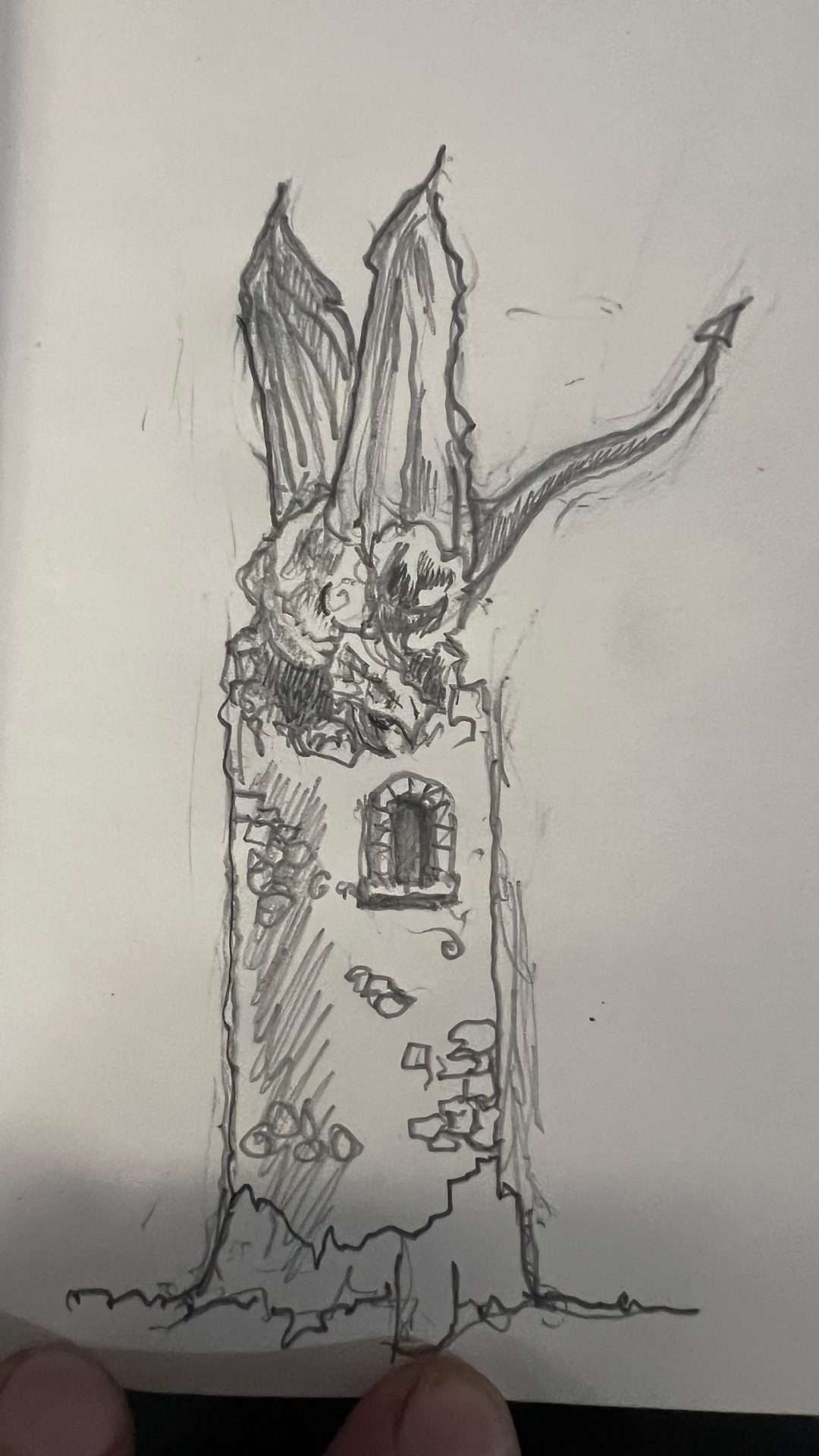
The commission involved transforming a four-metre tree stump into an imposing dragon emerging from the remains of a castle tower. It was the sort of dramatic subject perfectly suited to television as, after all, dragons and castles have always captured the imagination.
I had designed the sculpture to appear as though the creature had landed on the tower itself, its powerful claws gripping the ancient stonework while masonry cascaded down the length of the trunk. Beneath the dragon, the castle was intricately carved as a miniature world of winding staircases, tiny doors and delicate windows. I liked the idea of a once-thriving stronghold suddenly thrown into chaos, its inhabitants forced to flee as the dragon descended and tore into the masonry. The result is a piece that invites people to pause, look closer and imagine the story unfolding within the timber.
When people see a finished sculpture, they often imagine that chainsaw carving is simply a matter of starting the saw and making it up as you go along. In reality, most of the work happens long before the first cut. Every piece of timber is different, and every commission presents its own challenges. In this case, there was the added complication of fitting the dragon and tower naturally into the shape of the tree stump.
Before any carving begins, I spend a good deal of time looking, sketching and trying to understand the shape hidden within the wood. Once the chainsaws come out, the process starts broadly, removing large sections and establishing the main form. Only later do the finer details emerge: the curve of a horn, the shape of an eye, the texture of scales and the folds around the mouth.
This was exactly the sort of process the ‘Go Get Arty’ team wanted to capture. Early one morning, they arrived armed with cameras, microphones, tripods and enough cables to rig a small theatre production. My workshop and carving sites are usually fairly peaceful places, interrupted only by the sound of chainsaws and the occasional curious visitor, so having a television crew documenting every stage of the work was something rather different.
The challenge for the crew was condensing hours of carving into a few minutes of film. They captured the rough shaping of the dragon, the gradual appearance of its features and the endless shower of sawdust that follows any chainsaw sculptor around. I suspect they were also surprised by just how many different saws are involved. Larger saws do the heavy work, removing timber quickly and establishing the structure, while smaller carving saws are used for the details that bring the sculpture to life.
There is also quite a lot of standing back involved. Carving isn’t simply about cutting wood away as quickly as possible; it’s about constantly reassessing the shape as it develops. Sometimes a sculpture needs another hour’s work and sometimes it simply needs a cup of tea and ten minutes of staring at it from different angles.
Filming outdoors always adds another layer of unpredictability too. Light changes, the weather refuses to cooperate and chainsaws, unlike television schedules, cannot be rushed. Fortunately, the production team embraced the dust, noise and organised chaos that come with the job.
What I particularly liked about ‘Go Get Arty’ was its determination to show children that art can take many forms. Creativity isn’t confined to sketchbooks, crayons and paintbrushes. It can involve timber, stone, welding equipment or, in my case, several chainsaws and a healthy respect for gravity!
“It’s really good to be shown on children’s TV as I love seeing kids inspired to be creative,” I said afterwards. “I hope someone is inspired to try sculpting after watching this!”
I’m not expecting schools up and down the country to start handing out chainsaws in art lessons, but if seeing the programme encourages a child to pick up a pencil, carve a piece of wood or simply look at the world a little differently, then it will have done its job.
As for the dragon, it now sits exactly where it belongs: clinging to its tower, as though it has been there for centuries. The television crew have moved on to their next adventure; the sawdust has settled and life in the workshop has returned to normal – at least until the next unexpected email arrives!
You can see me on ‘Go Get Arty’ on the CBBC website or iplayer in Series 2, Episode 13 – and see some of the dragon carving taking shape, here:


